Are Gun Safes Waterproof?
- The Short Answer: No Gun Safe Is Truly Waterproof
- What "Water Resistant" Actually Means on a Spec Sheet
- The PALUSOL Seal: The Part Buyers Ask About Least and Benefit From Most
- The Water Damage I See Most Often Is Not a Flood
- Where You Put the Safe Matters More Than the Rating
- How to Protect a Gun Safe From Water Damage: My Install Checklist
- What to Do If Your Safe Has Already Been in Water
- Fire, Water, Burglary: Why One Safe Rarely Wins All Three
- Frequently Asked Questions
- What I Tell Customers Before They Sign
Updated: September 2026
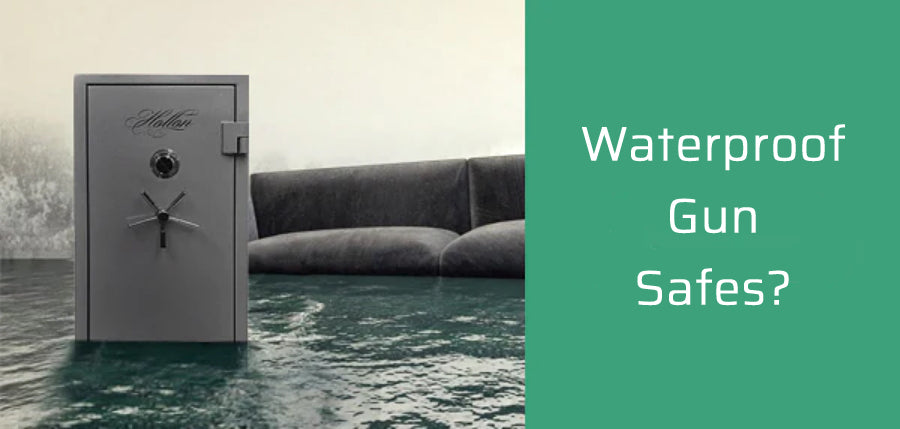
The Short Answer: No Gun Safe Is Truly Waterproof
Waterproof means impervious to water. Not resistant. Not protected for a while. Impervious.
A gun safe is not one object. It is a body, a door, a frame, a boltwork mechanism, a lock, a hinge set, holes drilled for anchoring, and usually a hole for a dehumidifier cord. Every one of those is a seam, and water only needs one. Submerge any safe long enough and water finds a path, usually through the door gap first and the anchor holes second.
So if a listing says a safe is fully waterproof, that is the moment to slow down and ask specific questions. Tested by whom? To what depth? For how long? In what orientation? A company that has actually tested its product can answer all four without hesitating. A company that has not will change the subject to steel thickness.
None of this means water protection is a lost cause. It means you are shopping for a degree of protection and a duration of protection, and the difference between a good outcome and a ruined collection usually comes down to choices made during installation, not the sticker on the door.
What "Water Resistant" Actually Means on a Spec Sheet
Two things are worth reading carefully.
The ETL verified water rating. When a safe carries one, it means an independent lab put that model in water under stated conditions and confirmed the interior stayed dry. The useful part is the wording: a rating is always expressed as a depth for a duration, for example a specific number of inches for a set number of hours. That is a real, checkable claim.
The part people miss is that the rating is a test result, not a guarantee about your house. A safe verified in a few feet of still water for a day tells you almost nothing about how it performs in moving floodwater carrying debris, or after sitting submerged for three days because nobody could get back into the neighbourhood. Read the rating as a floor, not a promise.
The fire rating and the water rating are separate claims. I see customers assume one implies the other. It does not. A safe can hold a strong fire rating and carry no water verification at all. Ask for both explicitly.
One more practical note from the delivery side: water ratings assume the safe is upright and level on a solid surface, closed and locked. A safe that is sitting slightly out of level because the garage slab pitches toward the drain does not seal the way it did in the lab. We shim for that on every install for exactly this reason.
The PALUSOL Seal: The Part Buyers Ask About Least and Benefit From Most
Around the door frame of a good safe there is a thin strip of material. On better safes it is PALUSOL, a heat activated intumescent seal. In normal conditions it just sits there. Somewhere in the range of roughly 212 to 250 degrees Fahrenheit it activates and expands to several times its original thickness, filling the door gap.
That expansion is designed for smoke and heat. But here is the situation I want you to picture, because it is far more common than a river coming through your living room.
Your house catches fire. The fire department arrives. Putting out a residential structure fire can take thousands of gallons of water, and in a bad one it can run much higher. That water goes everywhere, and gravity takes it straight down through the floors. Your safe survives the fire and then sits in standing water, or takes a direct hit from a hose, or gets soaked by a sprinkler head that ran for twenty minutes.
A seal that has already expanded from the heat is doing real work in that moment. Same story with a fire extinguisher discharge, which leaves a fine corrosive powder that you absolutely do not want settling onto blued steel.
When I walk a customer through a safe on the showroom floor, the door seal is one of the first things I point at, and it is almost never the thing they came in asking about.
The Water Damage I See Most Often Is Not a Flood
This is the section I would most want the older version of this article to have included, because it is where my job differs from a spec sheet.
In more than ten years, the number of safes I have opened that were damaged by an actual flood is small. The number damaged by slow, boring, everyday moisture is large. Here is what actually causes it.
- Condensation on a concrete slab. Concrete holds and releases moisture. A safe bolted directly to a garage or basement slab, with no barrier underneath, can sweat at the base. The customer never sees it because it happens under a safe that weighs several hundred pounds and never moves. Months later they open the door and find surface rust starting on the bottom of the barrels sitting in the floor rack.
- Temperature swings. In Las Vegas I deal with the extreme version of this. A garage here can run well over 110 degrees in July and then drop sharply overnight. Warm humid air gets into the safe, the steel cools, and moisture condenses on the coldest surfaces, which are your firearms. Cold climates produce the same effect in reverse. A safe in an unconditioned space is a condensation machine.
- Plumbing, not weather. Water heaters fail. Supply lines to upstairs bathrooms let go. Washing machine hoses split. I have been called out for more safes soaked by a failed water heater in the same garage than by anything the sky did.
- Landscape and irrigation. Sprinkler heads pointed at a garage door, and a garage floor that slopes inward instead of outward, will put a quarter inch of water across a slab several times a week without anyone noticing.
- Storing things wet or oily and sealing the door. A safe is a closed box. Put a damp cleaning rag or a gun that came in from a humid range session inside, close it, and that moisture has nowhere to go.
The fix for most of this is not a better safe. It is a dehumidifier, a barrier and a sensible location.
Where You Put the Safe Matters More Than the Rating
I say this to customers constantly, and I mean it literally: I would rather install a moderately rated safe in a smart location than a highly rated safe in a bad one.
- Interior beats garage. An interior closet or room that shares the home's climate control avoids nearly every condensation problem described above. If the only realistic spot is a garage, that is workable, but plan on a dehumidifier and a moisture barrier from day one rather than as a fix later.
- Up beats down. Every inch of elevation is time. If your area floods, a safe on a properly built platform gives you a buffer, and just as important it gives you a window to get back to the house and retrieve contents before water reaches the door seam.
- Away from plumbing walls. Look up before you choose a spot. If there is a bathroom, laundry or water heater directly above, pick a different wall.
- Think about the exit path too. This is a delivery detail people never consider until it matters. If the safe is in a finished basement at the bottom of a narrow turn, and the basement takes on water, nobody is moving that safe until the water is gone. Location affects recovery, not just protection.
How to Protect a Gun Safe From Water Damage: My Install Checklist
This is close to what I actually run through on site.
- Set a moisture barrier under the safe. On concrete, a hard barrier between slab and safe base stops the sweating problem before it starts. This is the single cheapest thing on this list and the one most often skipped.
- Level the safe properly. Shims where needed. A level safe closes into its seal evenly. An unlevel safe develops a gap at one corner of the door, and that corner becomes the entry point for water, smoke and dust.
- Elevate if you are in a flood prone area. A poured concrete curb or a properly engineered wood platform. Build it to actually carry the load and keep the safe anchored to it. Do not improvise this with pallets or cinder blocks laid loose.
- Seal the penetrations you created. Anchor holes and any pass through for a dehumidifier cord are direct paths to the interior. A quality sealant around them at install time closes a hole that was not there when the safe left the factory.
- Run a dehumidifier and verify it. A rod style dehumidifier gently warms the interior air and keeps it moving, which prevents condensation. Desiccant canisters and silica packs work too but need recharging on a schedule people forget. I tell customers to put a cheap hygrometer inside and actually look at it for the first month. Aim for roughly 30 to 50 percent relative humidity. Guessing is how collections rust.
- Use secondary containers inside. Sealed bags or watertight cases for documents, hard drives, currency, photographs and anything irreplaceable. This is your last line, and it is the difference between a wet safe and a total loss. Paper and photos are what people actually grieve over. Steel can be cleaned.
- Keep a current photo inventory somewhere outside the safe. Not water protection exactly, but after a flood or fire it is the thing that determines whether an insurance claim goes smoothly or turns into an argument.
- Read your coverage before you need it. Some manufacturers include limited water damage coverage. Homeowners policies vary enormously, and standard policies commonly exclude flood entirely, which surprises people at the worst possible moment. Check whether firearms and collectibles are scheduled items on your policy. I am not an insurance advisor, so confirm the specifics with your agent, but please confirm them before something happens rather than after.
What to Do If Your Safe Has Already Been in Water
I get these calls. The order matters.
- Do not force the door. If the lock has been submerged, an electronic keypad may behave unpredictably and a mechanical dial can bind with silt. Forcing it can lock you out permanently and turn a cleanup into a drilling job.
- Do not power up a soaked electronic lock. Replacing the battery on a wet keypad can short the board. Let a technician assess it.
- Get it open sooner rather than later. Every hour a sealed safe sits with wet contents inside is an hour of accelerated corrosion, because the safe is doing exactly what it was designed to do and holding that humid air in. This is the counterintuitive part: a good seal works against you once water is already inside.
- Once open, deal with the firearms immediately. Get them out, dry them, and get oil on bare metal. Surface rust caught within a day or two is usually cosmetic. Rust left for two weeks in a sealed humid box is a different conversation.
- Expect the fire insulation to be compromised. Most fire lining is a gypsum based material. Once it has absorbed water it does not simply dry back to its original state, and the safe's fire rating should be treated as gone. A safe that has been through a flood may still function as a secure container and no longer perform as a fire safe. Have it evaluated.
- Photograph everything before you clean anything. For the claim.
Fire, Water, Burglary: Why One Safe Rarely Wins All Three
This is a design tradeoff, not a marketing failure, and understanding it makes you a much better shopper.
Fire protection comes from insulation and seals. Burglary protection comes from thick steel, hardplate, relockers and anchoring. Water protection comes from gasketing and sealed penetrations. These pull in different directions. Space inside a door taken up by insulation is space not taken up by steel. A composite fire safe body and a heavy plate burglary body are built on different premises.
So a safe marketed hard on fire and water performance often carries a modest burglary rating, and a serious burglary rated safe may carry a modest fire rating or none at all.
The right move is to decide what you are actually defending against, in order. For most homeowners, the realistic threat ranking is: a burglary, then a house fire, then water, and for most people water arrives as a consequence of the fire rather than on its own. If you live in a genuine flood zone, reorder accordingly. Then buy for your ranking and use installation and accessories to shore up the rest.
Ask for the three ratings separately, in writing, every time. Any reputable dealer will give them to you without flinching.
Frequently Asked Questions
Are gun safes waterproof?
No. No gun safe is truly waterproof, because waterproof means impervious to water and every safe has seams, a door gap, a lock body and anchor holes. Better safes are water resistant to a tested depth for a tested duration, which is typically expressed as an ETL verified rating.
How long can a gun safe stay underwater?
Only as long as its verified rating states, and often less in real conditions. Ratings are established in still water with the safe upright, level, closed and locked. Moving floodwater, debris impact, an unlevel base or a longer submersion than tested will all shorten that window.
Can a fireproof safe survive a flood?
It can survive it as a container, but its fire rating usually will not. Most fire insulation is gypsum based and absorbs water. After a flood the safe should be professionally evaluated and should not be assumed to still offer its original fire protection.
Will guns rust inside a closed safe?
Yes, and this is the most common water related damage I see. A sealed safe holds humid air in. Condensation on a concrete slab, temperature swings in a garage, or simply storing something damp inside will start surface rust. A dehumidifier and a moisture barrier under the safe prevent nearly all of it.
Do I really need a dehumidifier in my gun safe?
In almost every case, yes. A rod style dehumidifier or rechargeable desiccant keeps interior humidity in a safe range. Put an inexpensive hygrometer inside and target roughly 30 to 50 percent relative humidity so you are measuring rather than hoping.
Is it okay to put a gun safe in the garage?
It is workable but it is the harder environment. Garages see the biggest temperature swings, sit on bare concrete, and often contain the water heater and washing machine. If the garage is your only option, plan on a moisture barrier, a dehumidifier and careful attention to where the slab drains.
Should I bolt down a safe if I live in a flood zone?
Yes. Anchoring is primarily burglary protection, and a large safe can shift or tip in moving water. Bolt it down and seal the anchor holes afterward, since those holes are a direct path into the interior that did not exist before installation.
Does homeowners insurance cover water damage to a gun safe?
It depends entirely on your policy and the cause. Many standard policies cover sudden plumbing failures while excluding flood, which usually requires separate coverage. Firearms and collectibles often need to be scheduled to be fully covered. Confirm the details with your agent before you need them. I install safes for a living and am not an insurance advisor, so treat that conversation as a required step.
Does a PALUSOL seal help with water?
Indirectly but meaningfully. It is a heat activated seal that expands when temperatures reach roughly 212 to 250 degrees Fahrenheit, closing the door gap. That makes it very effective against the water that follows a fire, meaning hose water, sprinkler discharge and extinguisher agent, even though it is not a flood barrier.
What I Tell Customers Before They Sign
If you take one thing from this, take this: the question is not "is this safe waterproof." It is "what am I protecting against, how long do I need it to hold, and where is this thing going to live."
A safe with an honest ETL water rating and a good heat activated door seal, set on a moisture barrier, levelled properly, elevated if your area floods, running a dehumidifier, with your documents inside sealed bags, will outperform a more expensive safe dropped onto a bare garage slab and forgotten about.
I have opened safes after fires where the contents were perfect and safes after a slow leak nobody noticed where they were not. The difference was almost never the price tag. It was the install and the habits afterward.
Ask hard questions. Ask for the fire, water and burglary ratings separately. And if a salesperson tells you a safe is completely waterproof, ask them how deep and for how long, then watch what happens.
Written by