Updated: June 2026
I've spent more than ten years at The Safe Keeper, and most of that time has been out in the field, carrying safes into homes and bolting them down. I run our Las Vegas location and supervise delivery and installation, so I've set up handgun safes in nightstands, closets, garages, and floors across the valley. That hands-on work has taught me something the spec sheets don't: buying the safe is the easy part. Storing your handgun the right way is what actually keeps your family safe.
If you just bought your first pistol, congratulations. Now let's talk about where it's going to live when it's not on you.

What Safe Storage Really Means
People ask me about clever hiding spots all the time. An empty cereal box, a hollowed-out book, a vent, a gap under the floorboards. I understand the appeal, but a hiding spot isn't storage. Kids find things adults think are impossible to find, and a determined burglar tosses drawers and closets in minutes.
Real storage meets four standards at once. Your handgun should sit in a dry place away from heat, stay locked away from children and visitors, resist theft, and still be reachable by you in a few seconds when it counts. A good safe does all four. A shoebox in the closet does none of them. Everything else in this guide comes back to those four points.
The Numbers That Changed How I Talk About Storage
I didn't always lead with statistics. What changed my approach was seeing how many customers came in after a close call, not before. The research backs up what they told me. Studies have estimated that roughly 4.6 million American children live in homes with at least one unlocked, loaded firearm. Unsecured guns are tied to hundreds of unintentional shootings by children every year, and a large share of firearm suicides happen at home with a household member's own gun.
I'm not sharing that to scare anyone away from ownership. I own guns myself. The point is simple: the gap between a tragedy and an ordinary evening is often nothing more than a locked door and a few seconds. That's a gap a safe closes for you.
Why a Safe Beats a Hiding Spot
Here's the part people miss when they choose a hiding spot for speed. A hidden gun is slow. If you stash your pistol somewhere clever, you have to remember where it is, reach past whatever's in front of it, and hope you got the spot right in the dark. A quick-access handgun safe flips that. You mount it within arm's reach, and a keypad, fingerprint, or push-button lock puts the gun in your hand in a second or two.
So a safe isn't the slow, cautious option. Done right, it's the fastest reliable way to reach your firearm while keeping it away from everyone you don't want touching it. That combination is the whole reason quick-access safes exist.
How to Choose a Handgun Safe
This is the section I wish more first-time buyers read before they showed up at our door. A handgun safe isn't a commodity where every box is the same. Four things separate a safe you'll trust from one you'll regret.
- Lock type. For a bedside or quick-access safe, I steer most people toward one of three. A biometric lock reads your fingerprint and opens fastest. A digital keypad is dependable and lets several household members share a code. A mechanical push-button lock uses no batteries at all, so it never dies on you. If you hate managing batteries, the mechanical lock gives you the least to think about.
- Fire and water protection. This is the feature buyers overlook the most. A quick-access bedside box usually isn't fire-rated, and that's fine for a nightstand gun. But if a safe also holds passports, cash, and hard drives, look for a real fire rating measured in minutes at a given temperature, and a gasket that seals against water.
- Size and construction. Match the interior to what you actually store, then leave room to grow. Pay attention to steel gauge. Lower gauge numbers mean thicker steel and better pry resistance. Thin sheet-metal lock boxes work as a child barrier but pop open under a pry bar, so don't confuse a lock box with a security safe.
- Mounting options. Check that the safe has pre-drilled anchor holes and the hardware to use them. A safe you can't bolt down is a safe a thief can carry out the door.
Types of Handgun Safes and Where I'd Put Each One
Small handgun safes aren't all built for the same job. Here's how I match each style to a spot in the home, based on the installs I do most.
- Drawer safes. Tuck inside a desk or nightstand drawer and stay out of sight. Compact and easy to move, they fit a home office or bedroom where you want the gun hidden but handy.
- Bedside and nightstand safes. The most common bedside install I do. It sits within reach of where you sleep so you can open it in the dark in a couple of seconds. Set it on the nightstand, mount it to the bed frame, or bolt it to the floor underneath. A biometric or backlit keypad model earns its keep here.

Rhino Longhorn Nightstand Safe LNX2620 Nightstand-End Table Home Safe
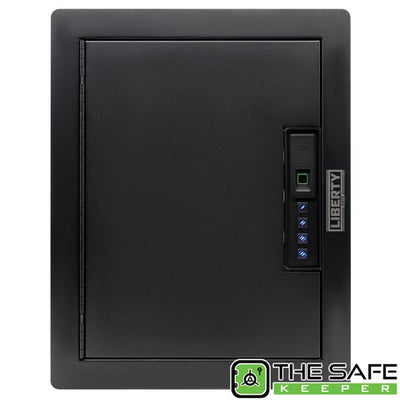
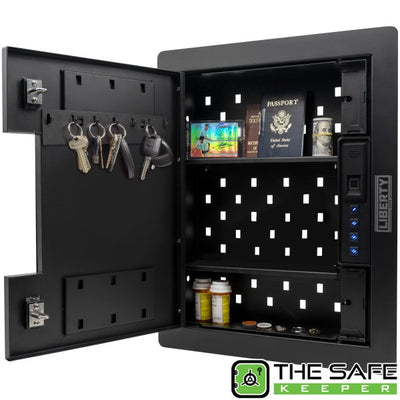
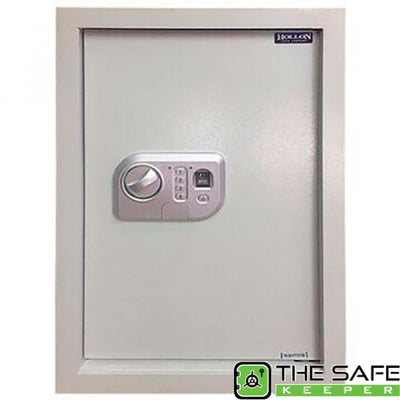
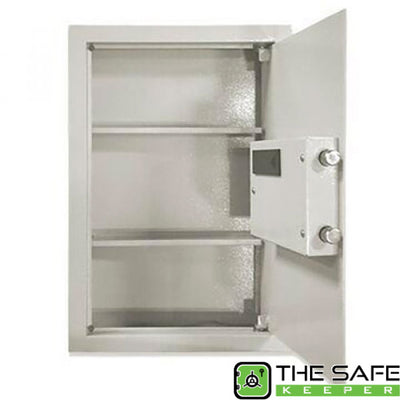
- Wall-mount safes. Hide behind a picture, a mirror, or a piece of furniture, and mounting at chest height means no bending down to reach it. I like these for a primary defense pistol because they're both concealed and fast.
- Handgun lock boxes and cases. Light and compact, and they shine when you travel. TSA rules require a locked, hard-sided case to fly with a firearm. Just remember the limit: it's a barrier, not a vault.
- Hidden safes. Built into the floor, a wall, or an ordinary-looking object so no one suspects it's there. Done well, it saves space, stays fast to reach, and gives a burglar nothing to find.
Anchoring and Installation: The Step Most People Skip
This is the part of my job I care about most, because it's where good intentions fall apart. I've walked into homes where someone spent good money on a quality safe and left it sitting loose on a closet floor. An unanchored handgun safe is a portable safe. A thief doesn't need to crack it in your bedroom. He picks it up, walks out, and opens it later with a pry bar and all the time in the world.
Anchoring fixes that, and the method depends on the house. Most homes here in Las Vegas sit on a concrete slab, so I anchor into the slab with masonry bolts, which is about as solid as it gets. In a home with a wood subfloor, you bolt through into a joist. For wall safes, I always hit the studs. The tools and fasteners change with the surface, and that's exactly why a bad anchor job is worse than none. A bolt sunk into drywall alone gives you a false sense of security.
Two more field notes I've learned the hard way. Garages in the desert get brutally hot, and heat drains the batteries in electronic locks faster than people expect, so I check those more often on garage installs. And biometric readers do better when they're kept clean, since dust and grime on the sensor are a common reason a fingerprint won't read on the first try. Small habits, but they're the difference between a safe that opens every time and one that makes you fumble.
Build Security in Layers
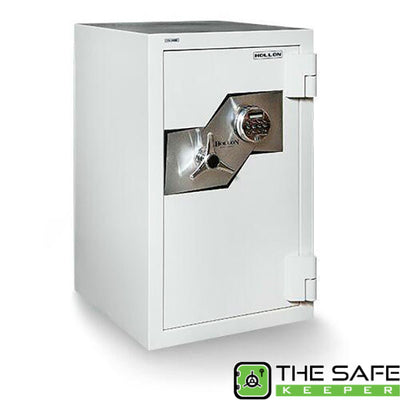
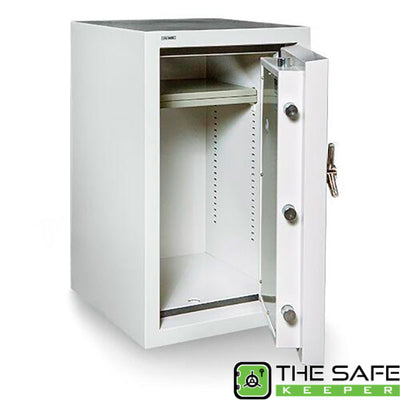
The best-protected homes I visit don't rely on a single safe. They layer. A biometric bedside safe holds the defense pistol for fast access at night, while a larger, heavier, fire-rated safe elsewhere in the house stores the rest of the collection, ammunition, and valuables. Your everyday gun stays within reach, and everything else stays locked down behind more steel.
A small handgun safe is one of the most affordable pieces of security equipment you can buy. Leaving a firearm unsecured, on the other hand, can cost far more than money. If you take one thing from a decade of my installs, let it be this: buy the right safe for the job, put it where you can reach it, and bolt it down.
FAQ
Where's the best place to store a handgun in the house?
It depends on the gun's job. Keep a home-defense pistol in a quick-access safe within reach of your bed, mounted to the frame or bolted to the floor. Store the rest of your firearms in a larger, anchored, fire-rated safe in a closet, office, or another room. The goal is fast access to one gun and locked-down security for everything else.
Are biometric gun safes reliable?
Modern biometric safes are dependable when you set them up well. Register the same finger a few times from slightly different angles, keep the sensor clean, and change the batteries on a schedule instead of waiting for them to die. Most quality models also include a keypad or key backup, so you're never locked out if the reader has an off day.
Do I need a fireproof safe for a handgun?
For a bedside quick-access box, fire protection usually isn't the priority; speed is. But if the safe also holds documents, cash, drives, or a collection you can't replace, a fire rating is worth it. Look for a rating stated in minutes at a specific temperature, plus a seal that resists water from sprinklers or a burst pipe.
Can't I just hide my gun instead of buying a safe?
Hiding a gun fails on two fronts. Children are far better at finding hidden objects than adults expect, and burglars search the common spots first. A hiding place also slows you down when seconds matter. A quick-access safe keeps the firearm away from kids and thieves while still putting it in your hand in a second or two.
Should I bolt my handgun safe down?
Yes. An unanchored safe is a portable safe. A thief can carry a loose box out of your home and force it open later at his leisure. Anchor into a concrete slab, a floor joist, or wall studs depending on your home, using the safe's pre-drilled holes and proper fasteners for that surface.
What's the fastest way to open a safe at night?
A biometric lock or a backlit digital keypad is easiest to use half-awake in the dark. A mechanical push-button lock is also fast once you've practiced the code by feel, with the bonus that it never needs batteries. Whichever you choose, practice opening it a few times so the motion is automatic when you need it.