Updated: June 2026
I've spent more than ten years at The Safe Keeper delivering, installing, and servicing safes across the Las Vegas valley. In that time I've seen a lot of safes after a burglary, and I've noticed something that surprised me at first: two safes can both be called "gun safes," cost wildly different amounts, and end a break-in in completely opposite ways.
This isn't a sales pitch. It's what I've watched happen with my own eyes, and what those scenes taught me about how a gun safe actually holds up when someone is standing in your garage with your own tools, trying to get in.
Let me walk you through two of them.
Two safes, two very different endings
Before anyone writes in: yes, these two safes are in different price ranges and different security classes. They're night and day. I'm not comparing them to be unfair. The only things they share are that both were bought to protect someone's valuables, and both were attacked by real thieves who grabbed tools out of the victim's own garage.
That's the point. I want you to see how differently two safes behave during an actual home invasion, because the label on the box doesn't tell you much.
Safe #1: the big-box "safe" that opened in 30 minutes
The first safe belonged to a customer who bought it without doing much homework. He figured he was getting a solid safe at a great price. He picked it up at a big-box store, where the salesperson didn't know much about safes and, honestly, didn't seem to care. So he walked out with what I call a false sense of security.
He took it home, filled it with the things that mattered to him, financially and personally, locked the door, and spun the dial. A couple of months later, his house was burglarized while he was out shopping. By his estimate, the thief was in and out in under 30 minutes. And it worked. Here's how it went down.
They cut the hinge first. Almost everyone does. The thinking is that the hinge is what holds the door shut. It isn't. The hinge only lets the door swing. Most safes today use locking bolts that slide behind the door frame, so the door stays put whether the hinge is there or not. Cutting it is wasted effort.
When the door didn't fall off like they expected, they went back to the garage. They came back with a hammer, a screwdriver, and a few other basic hand tools and started prying. This safe had a wide gap between the door and the body, so the tools slid right in. It didn't take long. The bolts gave way and the 14-gauge steel folded back like the lid of a tin can.
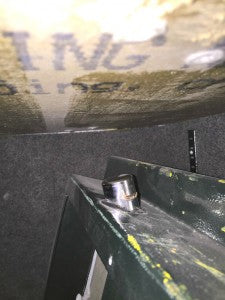
Pic.1 Safe break-in Bolts

Pic.2 Safe break-in Bottom
In less than half an hour the safe was open. Firearms, cash, jewelry, photo albums, personal documents, all of it gone. When he looked at the wreckage, the owner understood what he'd actually bought. That "safe" could keep firearms away from curious kids and give some protection in a fire. That's it. Past that, it was an imitation of a real safe, and it gave him a false sense of security. He came into our store afterward, and we were glad to help him understand his options and pick something that fit his needs and his budget.
Safe #2: the security safe that survived three attacks
The second safe came from us about ten years ago. This customer knew what he wanted from the start: a top-tier gun safe, no shortcuts. Maybe he had a valuable collection, maybe he just believed in doing things right the first time. Either way, he ended up with one of the strongest safes we carried at the time, a Summit Everest 7241.
The break-in played out a lot like the first one. A group forced their way in, grabbed the homeowner's tools, and went to work. First target? The hinge again. They spent what had to be a long, frustrating stretch cutting through three thick hinges. Same mistake, same result: the door wasn't going anywhere. This Summit uses 24 locking bolts, each an inch and a half thick, extending behind the frame. It also has a glass relocker, a glass plate that shatters under attack and fires a spring-loaded bolt that jams the door shut for good.

Pic.3 Safe break-in
You'd think that after all that wasted effort they'd give up. They didn't. They moved to phase two: prying. That went even worse for them. The Summit's door is an inch and a half thick, built from two quarter-inch solid steel plates with fire insulation between them, and the gap around the door is so tight you can barely slide a credit card in. There was nothing to grab.

Pic.4 Bolts
Still not done, they had a few grinding wheels left over from the hinges, so they tried cutting straight through the front of the safe. You can see from the recovered photos how far they got: through the first layer and no further. They ran out of wheels and ran off. The contents never moved.

Pic.5 Safe break-in Front

Pic.6 First layer Front
What actually makes a gun safe secure
After enough of these, you stop looking at the price tag and start looking at the build. Here's what I check on every safe, and what you should ask about before you buy one.
- Steel gauge and door construction. Gauge measures steel thickness, and lower numbers mean thicker steel. A lot of entry-level "gun safes" use 14- or even 16-gauge bodies, thin enough to pry or peel. A serious security safe uses much thicker plate, often a door built from multiple solid steel plates rather than a thin shell wrapped around drywall. The door is where most attacks land, so it's where thickness matters most.
- Locking bolts and the door gap. Count the bolts, check their thickness, and look at how they engage the frame. Bolts that extend behind the frame on multiple sides are far harder to defeat than a couple of thin bolts on one edge. Then look at the gap between the door and the body. A tight gap gives a pry bar nothing to bite; a wide gap is an open invitation.
- Relockers and hard plate. A relocker is a backup lock that triggers if someone attacks the lock or door, jamming everything shut. A hard plate sits in front of the lock to stop drilling. These features turn a long attack into a failed one, and they're usually missing from budget safes.
- Fire rating. A fireproof gun safe is rated for a certain temperature over a certain time, for example 1,200°F for 60 minutes. Fire protection and burglary protection are two different jobs, so check both. A safe can be great in a fire and weak against a pry bar, or the other way around.
- Burglary ratings you can trust. Many "gun safes" only meet the RSC (Residential Security Container) rating, a basic 5-minute pry test. That's a floor, not a guarantee. If you're protecting real value, look for higher independent ratings such as a UL burglary classification (the TL-rated series). The rating tells you how long the safe is built to resist a determined attack with tools.
- Weight and installation. Weight fights two threats. A heavy safe is harder to tip, pry against, or carry off whole, which is a real risk with lighter safes that thieves simply haul away to open later. Bolting the safe down matters just as much. A properly anchored safe gives an attacker nothing to work against, and this is the part I see done wrong most often. Installation isn't an afterthought; it's part of the security.
Match the safe to what you're protecting
People ask me which safe is "the best." The honest answer is that it depends on what's going inside.
Some safes weigh around 100 pounds and are really meant to keep guns away from kids. Others run in the 800-pound range, have been pry- and drill-tested, and have been burned in a furnace to earn their fire rating. From there it climbs all the way to 8,000-pound safes and full vault rooms built to protect millions.
So the first question isn't "what's the best safe," it's "what's the total value of what I'm securing?" Your safe is an insurance policy. Putting $60,000 in gold behind a $700 safe is a gamble. Spending $12,000 to protect a few photo albums is overkill. Somewhere between those extremes is the safe that fits your collection, your valuables, and your peace of mind.
Frequently asked questions
Can a gun safe be broken into?
Yes. Any safe can be defeated with enough time, tools, and skill. The real question is how long it holds out. A budget safe can fall in minutes to basic hand tools, while a well-built security safe can survive cutting, prying, and grinding long enough that most thieves give up and leave.
Why do burglars cut the hinges first?
Because they assume the hinges hold the door shut. On almost every modern safe, they don't. The locking bolts behind the frame hold the door, so cutting exposed hinges usually accomplishes nothing but wasted time.
What steel gauge should a good gun safe have?
Lower gauge means thicker steel. Many entry-level safes use 14- or 16-gauge bodies, which are easy to pry or peel. For real burglary resistance, look for thicker body steel and, more importantly, a heavy door built from solid steel plate rather than a thin shell.
Is a fireproof gun safe also burglar resistant?
Not automatically. Fire protection and burglary protection are separate ratings that test for different things. A safe can pass a fire test and still be easy to pry open, so check both ratings before you buy.
Does a gun safe need to be bolted down?
In most cases, yes. Anchoring the safe to the floor removes the thief's ability to tip it, pry against it, or carry it off to open elsewhere. A quality safe that isn't bolted down loses much of its protection.
How much should I spend on a gun safe?
Match the safe to the value of what's inside. Think of it as insurance: a light safe is fine for keeping firearms from children, but protecting significant value in firearms, jewelry, cash, or documents calls for a heavier, higher-rated safe with real burglary and fire protection.
A note from me
It's always hard when someone walks into our store after the fact. That's the majority of the people I meet. Most never thought about a real safe until their home and their privacy were already violated.
Every so often, though, we get to see a break-in that failed, like that Summit. Those are the days that remind me we're not just selling metal boxes. We're helping people protect what they can't replace, and giving them honest information to make that decision before they need it, not after.
If you're weighing your options, figure out what you're really protecting first. The right safe follows from that answer.