Updated: June 2026
I have spent more than ten years with The Safe Keeper, and a large part of that time has been spent on the floor and in customers' homes, delivering and installing safes and then walking owners through how to set them up. In that decade I have opened, leveled, anchored, and outfitted more safes than I can count. So when people ask me which gun safe accessories are worth the money, I am not answering from a product catalog. I am answering from what I have watched hold up, fail, or quietly make someone's life easier years after the install truck pulled away.
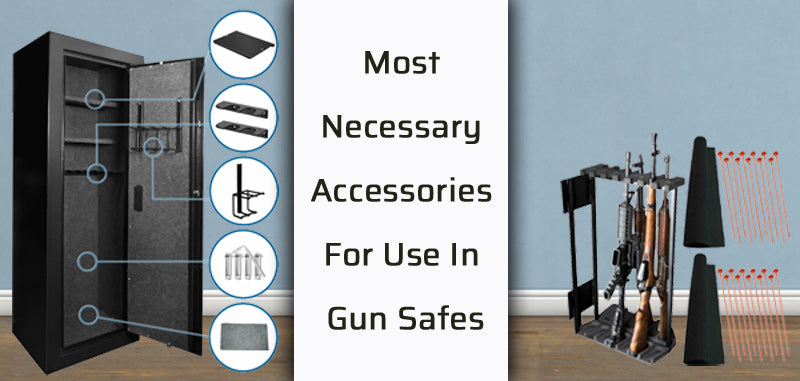
This article is my honest take. I will tell you what I put in my own safe, what I recommend to customers in Las Vegas every week, and where I think people waste money. Some popular accessories matter far more than the listicles suggest, and a couple are mostly decoration.
How I Think About Accessories Before Buying Anything
Here is the mindset I bring to every install, and I think it saves people a surprising amount of money. A gun safe is not a display case. It is a controlled environment that has to do three jobs at once: protect against theft, protect against fire, and protect against the slow damage that happens when nobody is looking. Most accessories fall into one of those three buckets, plus a fourth bucket I call convenience.
When a customer asks me what to add, I start by asking what they are actually storing and where the safe lives. A collector with twelve long guns in a humid garage has very different needs than someone keeping one handgun and a few documents in a climate controlled closet. The accessories that matter are the ones that solve a problem you genuinely have, not the ones that fill the most space in the cart. I would rather see someone spend forty dollars on the right humidity setup than two hundred on racks they will reshuffle once and forget.
So as you read the list below, sort each item into protection or convenience for your situation. That single habit will tell you where to spend first.
Humidity Control: The Accessory I Tell Almost Everyone to Buy First
If I could only recommend one accessory, this is it, and it is not close. More safes get quietly ruined by moisture than by burglars. The damage is sneaky. You open the safe a few times a year, everything looks fine, and then one day you pull out a blued rifle and there is a haze of surface rust along the barrel, or the felt lining smells musty and your documents have gone soft at the edges.
People assume the desert protects them. I work in Las Vegas, and I still tell customers to control humidity, because the problem is not just outdoor weather. A heavy steel safe sitting on a concrete slab in a garage acts like a cold surface that condensation collects on, and every time you open the door in summer you let warm moist air inside that cools and settles on your guns. Steel and gun oil and trapped air do not mix well over months.
There are two approaches, and I usually pair them.
Electric Dehumidifier Rods Versus Desiccant Packs
An electric dehumidifier rod is a low wattage heating element that sits along the bottom of the safe. It does not dry the air by pulling moisture out. It gently warms the interior a few degrees so condensation never forms in the first place. This is what I install most often because it runs continuously, needs almost no attention, and is genuinely effective for the long haul. The one trade off is that it needs a power port or a cord pass through, which is something I plan for during installation rather than after.
Desiccant solutions, including the rechargeable canisters and the silica packs, absorb moisture directly from the air. They are perfect when you cannot run power to the safe, or as a backup inside a smaller compartment. The catch is that they saturate and have to be recharged in an oven or replaced, so they reward people who will actually keep an eye on them. My honest advice: if you can get power to the safe, use a rod, and toss a rechargeable desiccant canister in the upper shelf as insurance.
Adding a Humidity and Temperature Monitor
A small hygrometer that reads humidity and temperature is a five dollar to twenty dollar accessory that punches way above its weight. You are aiming to keep relative humidity somewhere around 30 to 50 percent. Without a gauge you are guessing. With one, you glance at it when you open the safe and you know immediately whether your dehumidifier is keeping up or whether something changed. I have caught failing rods and overloaded desiccant packs this way long before they cost anyone a rusted firearm.
Lighting Systems That Actually Earn Their Place
A dark safe is a frustrating safe. The interior steel and dark lining swallow whatever light is in the room, and you end up reaching by feel, which is the last thing you want when you are handling firearms. Good lighting is cheap insurance against fumbling.
I am partial to motion activated LED strips or puck lights that switch on the moment the door swings open. Battery powered magnetic pucks are the easiest retrofit because they stick to the steel and need no wiring, though you will swap batteries occasionally. If your safe sits near an outlet, a hardwired LED strip kit is cleaner and you never think about it again. The detail most people miss is placement. Lights mounted high on the side walls, aimed inward, beat a single light on the ceiling because they wash the shelves and barrels instead of casting shadows down onto them.
Door Panel Organizers
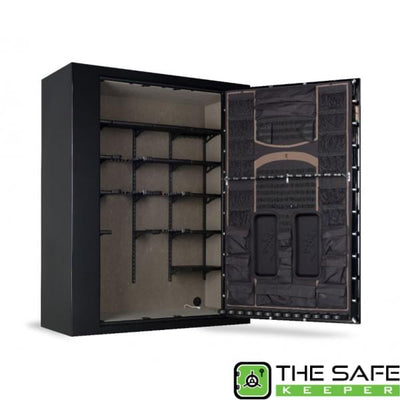
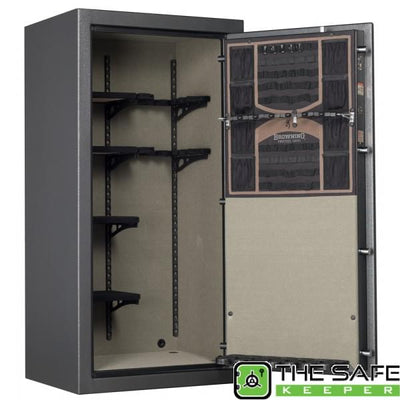
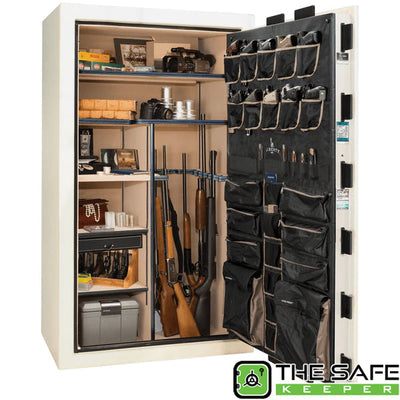
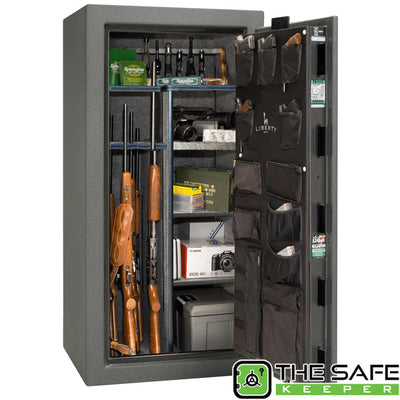
A door panel organizer mounts to the inside of the door and turns dead space into usable storage. This is one of the most genuinely useful upgrades for most owners, especially for handguns, magazines, flashlights, documents, and small valuables. It also keeps the most reached for items right at the front where you can grab them quickly.
A word of caution from doing these installs: door panels add weight to the door, and on some safes that extra weight on a fully loaded panel can affect how the door swings or seals over time. Buy a panel designed for your safe model or door dimensions, distribute the weight rather than loading everything onto the top row, and make sure nothing protrudes far enough to catch on your shelving when the door closes. Done right, a door organizer is the upgrade customers thank me for most.
Rifle Storage Accessories
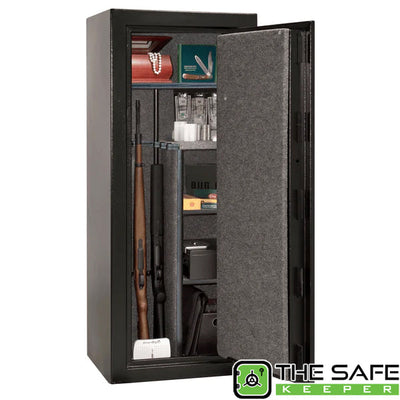
Rifle storage accessories exist to do two things: fit more long guns in the same footprint and stop them from knocking into each other. Barrel rests, rifle rods, and stock holders keep muzzles separated and scopes from banging together. Rifle rods in particular are a favorite of mine because they hang long guns from the top down, which frees the floor of the safe and lets you reorganize without a wrestling match every time you want the gun in the back.
The practical tip here is to mix storage styles rather than buying one product for everything. Scoped rifles, shotguns, and pistol grip firearms all sit differently, and a rigid one size approach leaves you with wasted gaps. Protect the finish too. A strip of felt or a barrel sock where steel would otherwise rest on steel prevents the little wear marks that show up after years of taking guns in and out.
Handgun Storage Accessories
Handguns are where safes get disorganized fastest, because pistols are small, stackable in theory, and a nightmare to dig through in practice. Handgun racks, pistol hangers, and under shelf holsters give every pistol a dedicated spot. Hangers that suspend a pistol by the barrel or grip are excellent for using vertical space, and they keep optics and sights from getting knocked.
For anyone who keeps a defensive handgun in the safe, I push organization even harder. In a situation where seconds matter, you do not want to be sorting through a pile. A rack at a consistent, known position means your hand goes to the same place every time.
Magazine Storage
Loose magazines are the clutter nobody plans for. They slide under everything, they scratch finishes, and a loaded magazine rattling around with your firearms is just untidy and avoidable. Magazine holders, racks, and door mounted pouches keep them upright, sorted by caliber or firearm, and easy to grab. Beyond tidiness, keeping magazines in a consistent dry spot protects the feed lips and springs and makes it obvious at a glance what you have loaded and what you do not.
Theft Protection and Anchoring
This is the category people assume the safe itself handles completely, and it mostly does. But two accessories meaningfully raise the floor on security.
Anchor Kits
Anchoring is not optional in my book. An unanchored safe, even a heavy one, can be tipped, walked, or hauled out the door by determined thieves, and in an earthquake or flood it becomes a hazard. An anchor kit bolts the safe to the concrete or framing through the pre drilled holes in the base. I anchor as a standard part of installation whenever the location allows, because a safe you cannot remove is a safe that resists the most common smash and grab approach. If you bought your safe elsewhere and it is sitting unanchored, that is the first thing I would fix.
Alarms and Monitoring
A safe alarm or a contact and motion sensor adds a layer the steel cannot: it tells you something is happening. Some kits send an alert to your phone if the safe is moved, tampered with, or opened when it should not be. For a primary firearm safe, I think early warning is worth having, particularly if the safe is in a garage, a second home, or anywhere you are not always present.
Covers and Finishing Touches
A fitted cover protects the exterior finish from dust, scratches, and dings, and it can keep a safe looking new in a high traffic garage or workshop. Some owners also like that a cover makes the safe less conspicuous. I will be straight with you: a cover is a convenience and cosmetic item, not a protection essential. It is a nice touch if your safe lives somewhere it takes abuse, and easy to skip if it sits in a finished closet. Buy it last, after the accessories that actually guard your firearms.
How to Choose the Right Accessories for Your Safe
After all the individual items, here is how I would actually prioritize, because budgets are real and not every safe needs everything.
Start with the threats that act whether or not you are watching. Humidity control comes first because moisture damage is the most common and most preventable loss I see. Anchoring comes next if your safe is not already bolted down, since it is inexpensive and dramatically changes how a thief has to work. Those two are protection, and I would not skip either.
After that, move to organization and access based on what you store. If you are constantly digging for handguns and magazines, a door organizer plus a handgun rack will transform the safe more than anything else. If long guns are your priority, rifle rods or barrel rests come first. Lighting is a small spend that improves every single interaction with the safe, so I rarely talk anyone out of it.
Convenience and cosmetic items, like covers, come last. And whatever you buy, match it to your specific safe model and dimensions. The most common mistake I fix in the field is accessories that almost fit, because a rack an inch too tall or a door panel too heavy creates a daily annoyance that no amount of features makes up for. When in doubt, measure the usable interior before you order, and ask whoever sold you the safe what is designed to fit it.
A Simple Setup I Recommend for Most Owners
If you want a starting point that covers most people without overbuying, here is the package I would build:
- An electric dehumidifier rod sized to your safe, plus a small hygrometer to keep it honest.
- An anchor kit installed through the base into concrete or framing.
- A door panel organizer for your most reached for items.
- Motion activated LED lighting so you can actually see inside.
- Rifle rods or a handgun rack depending on what you store most.
That combination handles moisture, theft resistance, access, and organization for a reasonable spend, and it scales as your collection grows. Everything beyond it is refinement.
Frequently Asked Questions
Do I really need a dehumidifier in my gun safe?
In almost every case, yes. Moisture is the most common cause of quiet, expensive damage to firearms and documents stored in a safe, and even in a dry climate a steel safe collects condensation when warm air meets cold metal. A dehumidifier rod or desiccant solution is inexpensive insurance against rust and mildew, and it is the first accessory I recommend to most owners.
What is the best dehumidifier for a gun safe?
For most people, an electric dehumidifier rod is the best choice because it runs continuously, needs little attention, and prevents condensation rather than just absorbing moisture after it forms. If you cannot run power to the safe, a rechargeable desiccant canister is the better option, and many owners use both together. The right size depends on the interior volume of your safe, so match the rod length to your model.
How do I organize a gun safe so I can actually find things?
Give every category its own home. Use rifle rods or barrel rests to separate long guns, a handgun rack or hangers for pistols, a magazine holder for loose mags, and a door panel organizer for small items and the things you reach for most. Add lighting so you can see, and keep your most used firearms nearest the front. Consistent placement matters more than any single product.
Should I bolt my gun safe to the floor?
Yes, whenever the location allows it. An unanchored safe can be tipped over or carried off, and it becomes a tipping hazard in a quake or flood. An anchor kit bolts the safe through its base into concrete or framing and is one of the cheapest, most effective security upgrades you can make. We anchor safes as a standard part of installation.
Will a heavy door organizer hurt my safe?
It can if you overload it or use one not designed for your door. A fully loaded panel adds weight that, over time, can affect how the door swings or seals on some models. Choose a panel built for your safe, spread the weight across rows instead of piling it up top, and make sure nothing sticks out far enough to catch when the door closes.
Which gun safe accessories are a waste of money?
Nothing is universally a waste, but I see people overspend on elaborate racking before they have addressed humidity and anchoring, which are the things that actually prevent loss. Covers are cosmetic and worth buying last. The real waste is accessories that do not fit your specific safe, so always match products to your model and measure before you order.
The Bottom Line
After more than a decade of installing and outfitting safes, my view is simple. The best gun safe accessories are the ones that quietly protect your firearms when you are not paying attention, and the ones that make the safe easy to use so you actually keep it organized. Control the humidity, anchor the safe, light the interior, and organize around what you store. Get those right and your safe becomes what it should be: a secure, orderly, low worry home for the things you care about. If you are setting up a safe and are not sure what fits yours, that is exactly the kind of question my team and I answer every day.