Updated: June 2026
I've been with The Safe Keeper for more than ten years, and I've lost count of how many safes I've helped deliver and bolt down. The question I hear more than any other is simple: "What size safe do I need?" It sounds like it should have a quick answer. It doesn't, and the customers who rush it are usually the ones who call me a year later asking how to fit a second safe into the garage.
So let me walk you through how I actually size a safe for someone, using what I've seen work and what I've watched go wrong.

Start with what you're protecting
Every good sizing decision starts with an honest inventory. Before you look at a single model, write down what's actually going inside. Not what you own today in a vague sense, but the specific items: the rifles, the handguns, the deed to the house, grandma's rings, the backup drive with your photos on it.
The reason is that safes aren't measured the way you'd guess. Two safes with the same outside footprint can hold wildly different amounts once you account for wall thickness, fire insulation, and interior shelving. A tall, narrow safe swallows long guns with ease but wastes space if all you own is paperwork and a pistol. A short, wide safe does the opposite.
Match the shape to the contents first. The overall size follows from there.
A quick size guide by contents
Here's the rough starting point I give people at the showroom. Treat these as minimums, not targets.
| What you're storing | Practical minimum size | Better shape |
|---|---|---|
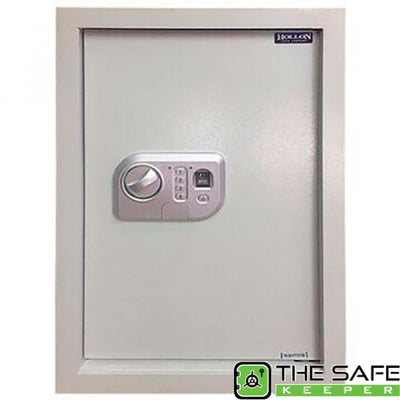
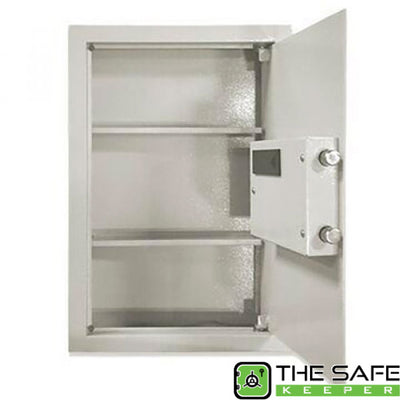
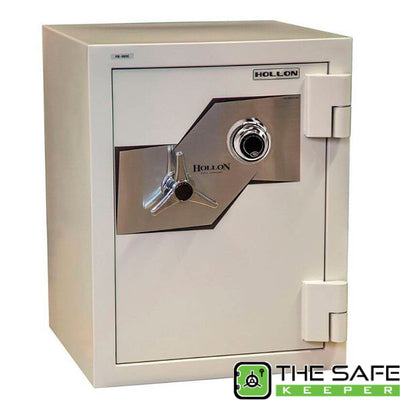
| A few documents, some jewelry, one pistol | About 20" tall by 20" wide | Compact box or small wall/floor safe |
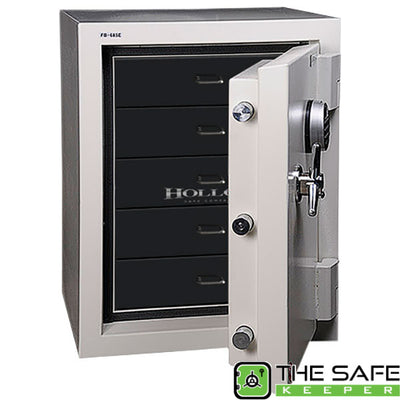
| Handguns plus cash, drives, and papers | 24" to 30" tall | Compact home safe with a shelf |
| Long guns, rifles, or shotguns | At least 55" tall by 25" wide | Tall gun safe with removable shelving |
| A growing gun collection plus valuables | 40 to 64 "gun" class | Full-height safe, more capacity than you think you need |
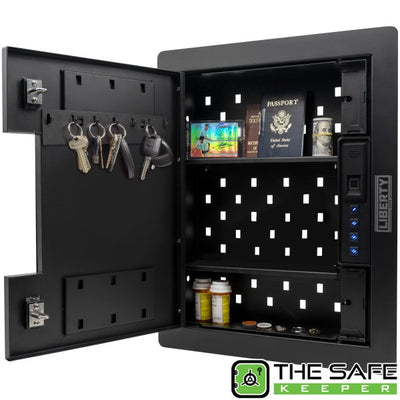
That first row covers a lot of homes. If you mainly want to protect a passport, a will, some jewelry, and a single handgun, a 20 by 20 safe is often plenty. The moment rifles enter the picture, height becomes the deciding factor, because a long gun needs vertical clearance a small box just can't give.
Why gun safe capacity numbers are almost always wrong
This is the part I wish more buyers heard before they shopped, because it's where the biggest mistakes happen.
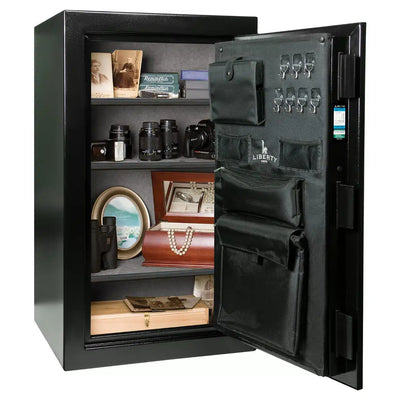
When a safe is labeled "holds 24 guns" or "64-gun capacity," that number comes from a lab test with thin, scope-free rifles slotted in perfectly, barrel to stock, with nothing else inside. Real life looks nothing like that. Add a scope, a thicker hunting stock, or a red dot, and each rifle takes up the space of roughly one and a half. Add a door panel organizer for your handguns, a shelf for ammo, or a few boxes of documents, and your usable capacity drops fast.
In my experience, you can plan on fitting a little more than half of the advertised number once you account for optics and accessories. A safe rated for 24 long guns comfortably holds around 12 to 16 real-world rifles with glass on them. If someone tells me they own 20 rifles, I'm steering them toward a safe rated for 40 or more, not one that claims to hold exactly 20.
Capacity numbers sell safes. They don't store your guns. Read them as a ceiling under ideal conditions, then cut them down to what your actual collection looks like.
Buy for the collection you'll have in five years
Almost nobody's gun collection shrinks. I've delivered plenty of second safes to people who bought exactly what they needed on the day they shopped, then kept buying rifles.
A safe is a long-term purchase. You'll likely own it for fifteen or twenty years, and bolting one down is real work. So think about where you'll be a few years out. If you're actively collecting, size up a tier. The extra interior space costs less now than buying, moving, and installing a whole second safe later, and it saves you from the game of trying to cram one more rifle into a full cabinet.
The same logic applies to families. If you've got kids who'll inherit firearms, or a spouse who's starting to shoot, that collection is only heading one direction.
Small safes: pistols, nightstands, closets, and cars
Not every job calls for a big steel box, and small safes are a huge part of what we sell. They just serve a different purpose: fast access to one or two handguns, or discreet storage in a tight spot.
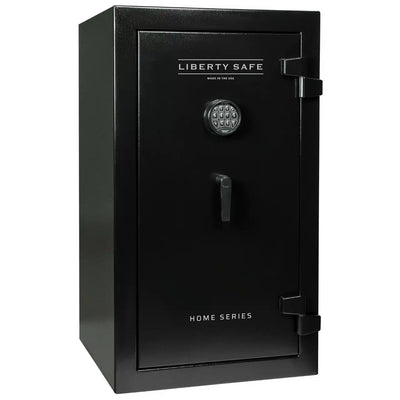
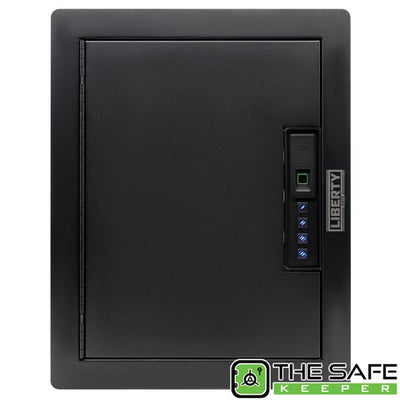
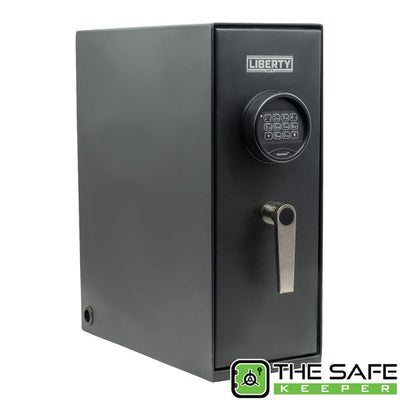
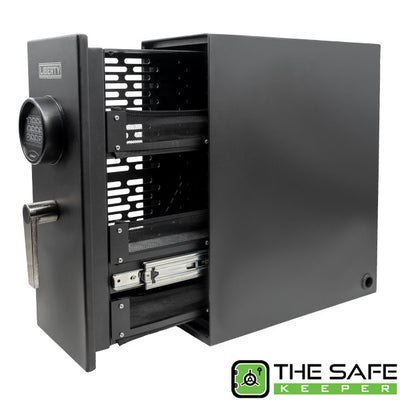
A small gun safe for the bedroom usually sits in a nightstand or bolts to the bed frame, and the good ones open with a quick-access keypad or biometric reader so you can reach a pistol in the dark. A closet-sized safe hides valuables and a handgun out of plain sight. There are even compact models built to mount in a vehicle console for people who carry.
The tradeoff with small safes is that they're easy to defeat if they're not secured. A safe light enough to carry off under one arm protects nothing once a burglar walks out with the whole box. Whatever small safe you pick, plan to bolt it down or cable it to something solid. That single step matters more than the brand on the door.
Weight, floors, and where the safe will actually live
This is my day job, so I'll be blunt about the part most online guides skip. The size you can buy is limited by where you can put it.
A full-height gun safe can weigh anywhere from 500 to well over 1,000 pounds empty. Load it with steel, ammo, and a fire liner and you're moving serious weight. Before you buy the biggest safe on the floor, ask yourself three things. Can we get it through the doorways and around the corners to reach the room? Will it fit up or down the stairs, or is it going in a ground-floor space? And can the floor handle it?
On a concrete slab, weight is rarely an issue. On a raised wood floor, especially upstairs, a heavy safe should sit over or near a load-bearing wall or a joist, not in the middle of an unsupported span. I've turned down installs where a customer wanted a half-ton safe in a second-floor closet with no support underneath. That's not me being difficult, that's me keeping the safe from ending up in the living room.
Measure your path before you fall in love with a size. The safe that won't fit through your front door is the wrong size, no matter how good the deal was.
Fire ratings take up space too
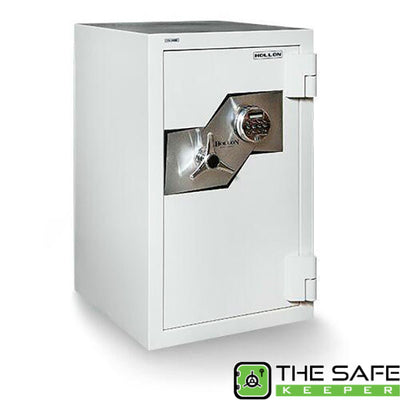
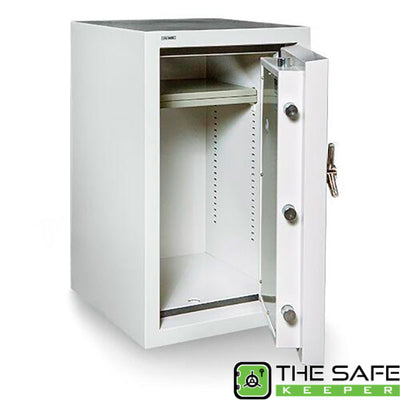
If fire protection matters to you, and for documents and drives it should, remember that the rating eats into your interior room. Fireproofing is essentially thick insulation packed inside the walls and door. A safe with a longer fire rating has thicker walls, which means a bigger outside footprint for the same inside space.
So when you're comparing a basic gun safe to a fire-rated one, don't just match the interior dimensions. The fire-rated model will be noticeably larger on the outside. Factor that into both your room measurements and the weight the floor has to carry.
How size affects price
Size is one of the biggest drivers of what a safe costs. More steel, thicker fire lining, a heavier door, and stronger locking bolts all add up, so a larger safe almost always costs more than a smaller one from the same line.
That said, the jump from a mid-size safe to the next tier up is usually a smaller percentage than people expect, and it's almost always cheaper than buying two safes down the road. My honest advice: don't cheap out on size to save a little now if you know you'll need the room. Under-buying is the more expensive mistake over time.
Frequently asked questions
What size safe do I need for a few documents and one handgun?
A safe around 20 inches tall by 20 inches wide is usually enough for passports, a will, some jewelry, cash, and a single pistol. If you want a shelf to separate papers from the gun, step up to a 24-inch model.
What size gun safe do I need for rifles?
For long guns you need height. Look for a safe at least 55 inches tall and around 25 inches wide so barrels have vertical clearance. Then size the capacity to your collection, keeping in mind that advertised gun counts run high.
Do gun safes really hold the number of guns on the label?
No. Those figures assume thin rifles with no optics, packed perfectly and nothing else inside. In practice, plan on a little over half the advertised number once you add scopes, accessories, and shelving.
How much does a gun safe weigh?
Compact home safes can weigh under 100 pounds, while full-height gun safes commonly run from 500 to over 1,000 pounds empty. Weight is a major factor in delivery, placement, and whether your floor can support it.
Can I put a heavy safe on a second floor?
Often yes, but placement matters. A heavy safe should sit near a load-bearing wall or over a floor joist rather than in the center of an unsupported span. Have the path and the floor evaluated before buying a large safe for an upper level.
Is it better to buy a bigger safe than I need right now?
Usually, yes. Collections grow, and installing a second safe later costs more than sizing up once. If you're actively collecting, buy one tier larger than your current needs.
Does a bigger safe cost a lot more?
Larger safes cost more because of the added steel and fire lining, but stepping up one size is typically far cheaper than buying and installing a second safe later.